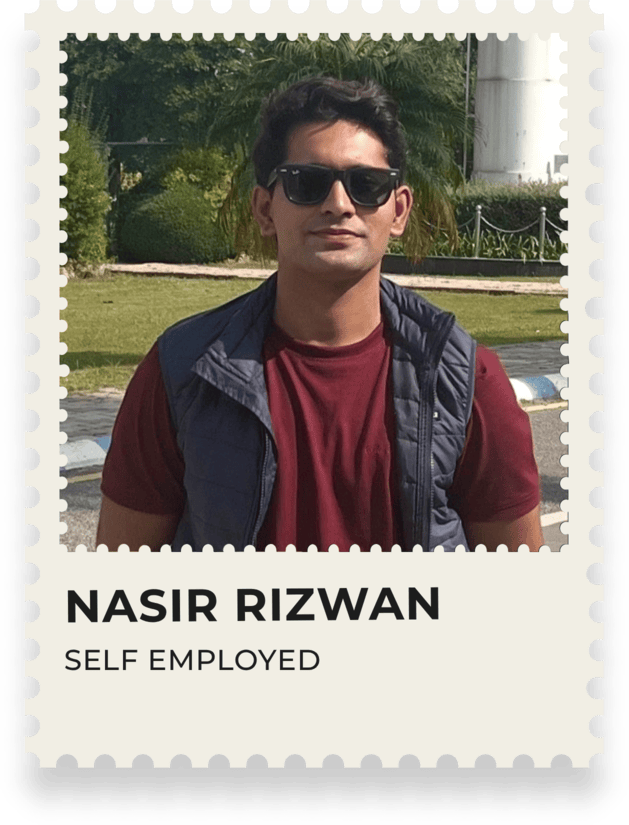
Nasir Rizwan is a space entrepreneur advancing grassroots space capacity in Pakistan. He has reached 15,000+ rural students through hands-on space outreach and trained 100+ teachers to sustain programs independently. His work earned the Space Outreach Award at International Conference on Applications of Space Technology, recognition from SUPARCO, and the Climate Award by World Space Week Association.
Nasir Rizwan is a pioneering space entrepreneur dedicated to building Pakistan’s space ecosystem from the grassroots up. His mission is simple yet powerful: ensure that students from rural and under-resourced communities are not spectators in the global space economy, but active contributors to it.
In the past year alone, Nasir led Pakistan’s largest rural space outreach initiative across Punjab, engaging more than 15,000 students in immersive, hands-on workshops. These sessions went far beyond telescope observations—students explored orbital mechanics, built model rockets, and learned how space-based data informs climate science. More importantly, he created a sustainable framework for informal space education by training over 100 teachers and collaborating with education boards and local bureaucracy to ensure long-term continuity.
His impact has been nationally and internationally recognized. Nasir received the Space Outreach Award at the International Conference on Applications of Space Technology, jointly acknowledged by SUPARCO and the National Centre of GIS & Space Applications (NCGSA). He has also won the National Space Ambassador Contest for four consecutive years. In 2024, he became a global recipient of the Climate Award by World Space Week Association, and his work was featured at the International Astronautical Congress in Sydney (2025).
Through SAFAR (South Asian Facility for Analog Research), Nasir is working to establish Pakistan’s first analog research station, enabling Mars and lunar simulation research within the region. At the policy level, he has developed practical frameworks for government and national space institutions to strengthen space capacity in developing nations.
At the heart of his work lies a belief: when access, trust, and community ownership come together, even the most under-resourced schools can nurture future scientists. Nasir is not just promoting space education he is building systems, infrastructure, and belief for a new generation of Pakistani innovators.